How AI Answering Services Improve Lead Generation for Service Businesses
For service businesses, lead generation is rarely just about getting more traffic. It is about turning every phone call, web inquiry, text message, and after-hours question into a real sales opportunity. When prospects reach out, they are often ready to book, compare providers, or ask for pricing. If no one responds quickly, that lead can disappear in minutes.
AI answering services are changing how service companies capture and qualify those opportunities. Instead of relying only on voicemail, limited front desk availability, or inconsistent follow-up, businesses can use AI to answer common questions, collect lead details, route urgent requests, and keep conversations moving at any hour. For companies that depend on fast response times, this creates a major advantage in both customer experience and revenue growth.
Why response speed matters more than most service businesses realize
In many local and regional service industries, the first business to respond often has the best chance of winning the job. This is especially true for home services, legal intake, healthcare scheduling, consulting, real estate support, financial services, and repair businesses. Prospects are usually not filling out forms for fun. They are looking for help with an immediate need, and they are often contacting multiple providers at once.
Slow response creates friction at the exact moment a prospect is most interested. A missed call at 7:30 p.m., a web form that sits unanswered until the next morning, or a generic voicemail greeting can quietly reduce conversion rates. AI answering services help close that gap by giving businesses a way to respond instantly, gather information, and maintain continuity until a human team member steps in.
This matters because lead generation is not only a marketing function. It is also an operations function. Businesses spend money on search ads, local SEO, referrals, social media, and website optimization to attract prospects. But if inbound demand is not handled well, marketing performance suffers. AI answering services improve the return on those efforts by making sure more inquiries become qualified leads instead of missed chances.
What an AI answering service actually does
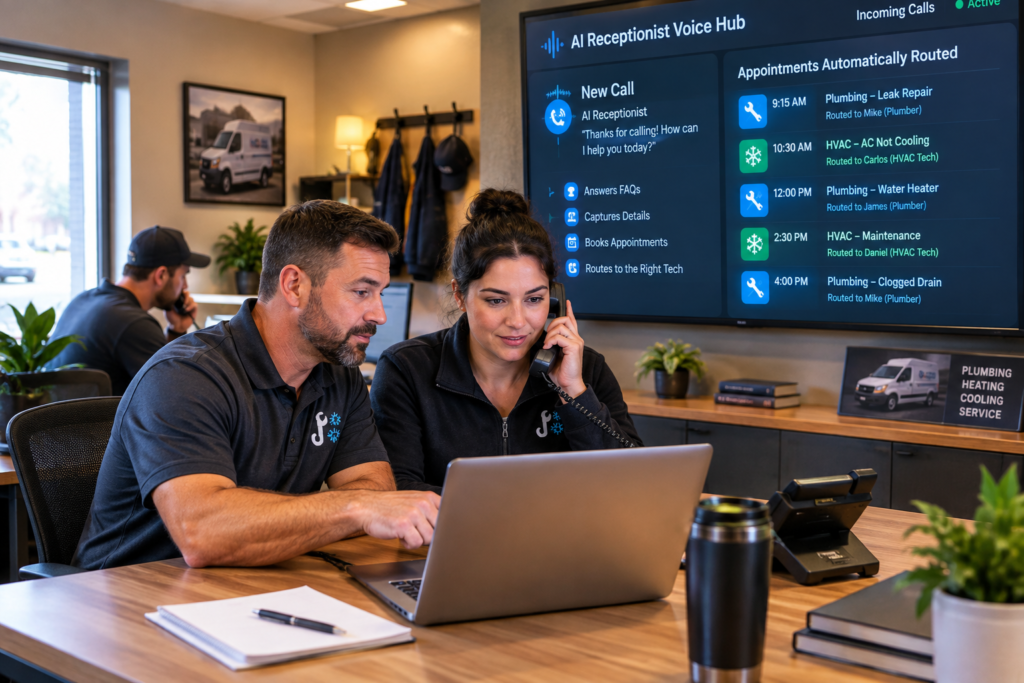
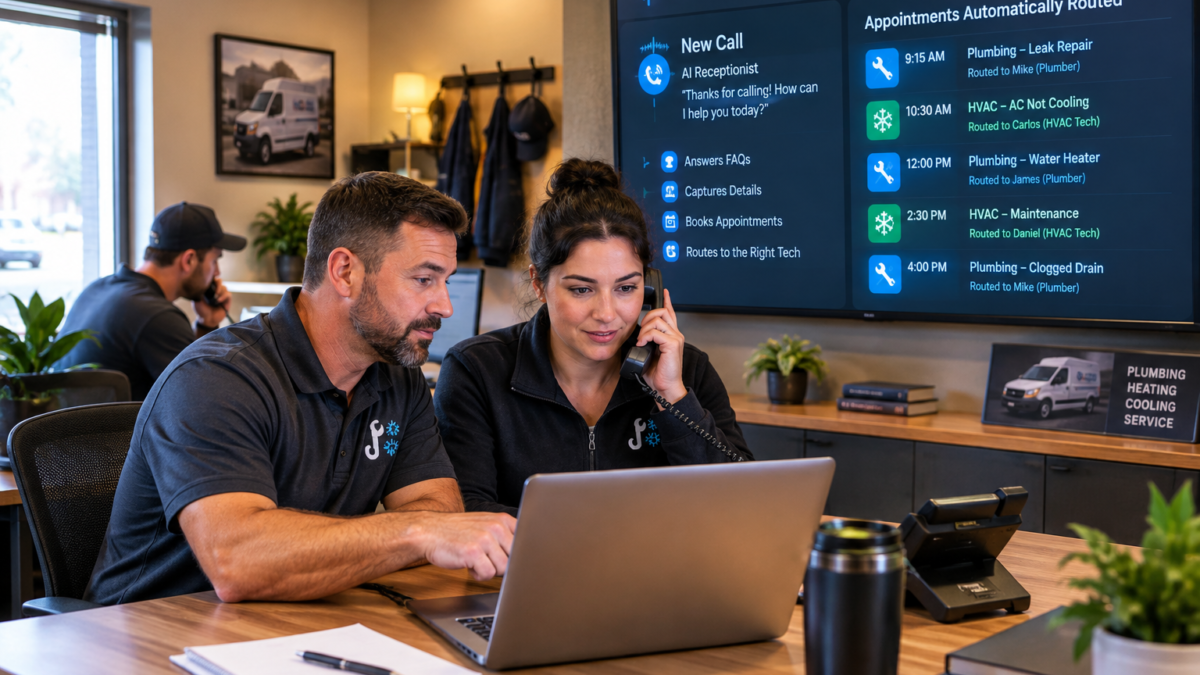
An AI answering service is more than a digital voicemail system. It is typically a conversational platform that can interact with prospects through voice, chat, SMS, or web-based messaging. Depending on the setup, it can answer questions, collect contact details, screen inquiries, schedule appointments, route calls, and trigger follow-up workflows.

For service businesses, the most useful capabilities usually include:
- 24/7 response coverage for calls and messages that arrive outside business hours
- Lead intake automation that captures names, phone numbers, email addresses, service needs, and location details
- Qualification logic that identifies urgency, budget range, service type, or fit
- Appointment scheduling based on availability rules or calendar integrations
- Call routing and escalation for emergencies, VIP clients, or high-value opportunities
- CRM and workflow integration so lead data moves directly into sales and service systems
- Consistent messaging across every inquiry, regardless of time or channel
The result is a more reliable front line for lead capture. Instead of hoping prospects leave enough information in a voicemail or waiting for office staff to return calls, businesses can create a structured intake process that runs continuously.
How AI answering services directly improve lead generation
They reduce missed opportunities
One of the clearest benefits is simple: fewer leads are lost. Service businesses often miss calls while teams are on job sites, in consultations, helping current clients, or dealing with peak demand. Even companies with office staff can struggle with overflow during lunch hours, evenings, weekends, or seasonal surges.
An AI answering service ensures that every inbound contact gets a response. That alone can improve lead generation because the number of captured inquiries increases without requiring a proportional increase in staffing.
They improve first-contact conversion
Many leads do not need a full sales conversation right away. They need acknowledgment, clarity, and a path forward. If AI can answer basic questions like service areas, hours, next available appointments, accepted insurance, financing options, or emergency availability, prospects are more likely to stay engaged.
That first interaction can also collect the details a human team needs to close the deal later. Instead of a vague message like “Call me back,” staff receive structured information that supports a better follow-up.
They support after-hours lead capture
After-hours traffic is often undervalued. People search for service providers in the evening, on weekends, and during stressful situations that do not align with office hours. An AI answering service can engage those prospects immediately, which is especially important in categories like plumbing, HVAC, electrical, legal intake, veterinary support, restoration, and urgent care scheduling.
Businesses that respond after hours often outperform those that simply reopen the next day. In many cases, the lead has already chosen another provider by then.
They create a smoother handoff to human sales teams
Lead generation does not end when a prospect makes contact. The handoff from intake to sales or scheduling is where many businesses lose momentum. AI answering services can standardize that transition by tagging lead type, urgency, location, and service category before routing the inquiry.
This makes the human follow-up faster and more relevant. Sales teams spend less time chasing incomplete details and more time moving qualified leads toward a booked appointment or signed agreement.
The biggest lead generation problems AI helps solve
Inconsistent intake quality

When intake depends entirely on whoever answers the phone, lead quality can vary widely. Some team members ask good qualifying questions. Others rush the call or forget key details. AI systems follow a defined process every time, which improves data consistency and lead tracking.
Limited staffing capacity
Many small and mid-sized service businesses cannot justify a full-time receptionist or call center team, especially for nights and weekends. AI answering services provide scalable coverage without requiring businesses to hire for every hour they want to be available.
Slow response to web leads
Web forms often underperform because they create a delay. AI chat and messaging tools can engage visitors instantly, answer common questions, and encourage action while interest is highest. This can significantly improve website conversion rates.
Poor lead prioritization
Not every inquiry has equal value or urgency. AI can identify high-priority leads based on service type, emergency status, location, or fit. That allows businesses to focus human attention where it matters most.
Fragmented communication channels
Leads now come from phone calls, contact forms, Google Business Profile interactions, live chat, social messaging, and text. AI answering services can help centralize intake logic across these channels so the business presents a more unified experience.
Use cases by service business type
Home services
For plumbers, electricians, roofers, HVAC companies, landscapers, and restoration firms, response time is tied directly to revenue. A homeowner dealing with a leak or no air conditioning is unlikely to wait long. AI can answer, determine whether the issue is urgent, collect address details, and route emergencies to on-call technicians. It can also schedule estimates for non-urgent work and answer common service-area questions.
Legal services
Law firms frequently lose leads because intake is inconsistent or unavailable after hours. AI answering systems can gather case type, incident timing, location, and contact details while maintaining a professional, calm tone. For practice areas with high inquiry volume, this can improve screening and reduce staff overload.
Healthcare and wellness providers
Private practices, dental offices, therapy groups, and wellness clinics often receive repetitive questions about hours, insurance, appointment availability, and new patient intake. AI can manage routine inquiries and booking requests, freeing staff to focus on in-office patient care. Businesses in regulated industries should ensure workflows align with privacy and compliance requirements.
Real estate and property services
Property managers, real estate teams, inspectors, and moving-related businesses often deal with time-sensitive inquiries. AI can pre-qualify leads, capture property details, route maintenance emergencies, and schedule consultations. This is especially valuable when agents or field teams are unavailable.
Financial and professional services
Accountants, consultants, insurance agencies, and business service firms can use AI to triage inquiries, identify ideal clients, and book discovery calls. This improves lead quality while reducing time spent on low-fit prospects.
How AI improves lead qualification, not just lead capture
Capturing more inquiries is valuable, but quality matters just as much as quantity. AI answering services can be configured to ask strategic questions that reveal whether a lead is a good fit, how urgent the need is, and what next step makes sense.
For example, a home remodeling company might ask:
- What type of project are you considering?
- What is the property ZIP code?
- When are you hoping to start?
- What is your estimated budget range?
- Have you already selected materials or design preferences?
A law office might ask:
- What type of legal matter are you contacting us about?
- When did the incident occur?
- Are there any upcoming deadlines or court dates?
- What is the best number and email for follow-up?
This structured intake helps businesses sort leads by readiness, urgency, and relevance. It also improves reporting. Teams can identify which channels produce the highest-quality inquiries and where follow-up processes need improvement.
Well-designed qualification flows should be concise, clear, and customer-friendly. The goal is not to interrogate prospects. The goal is to remove ambiguity while making it easier for the business to help them.
The role of AI in speed to lead and customer expectations
Modern consumers expect quick answers. This expectation is shaped by digital experiences across every industry. According to guidance from the National Institute of Standards and Technology on artificial intelligence, AI systems are increasingly used to support decision-making, automation, and better operational performance across sectors. In service businesses, one of the clearest operational gains is reducing the time between inquiry and response.
Speed to lead matters because it affects both trust and momentum. When a prospect receives immediate acknowledgment, they feel heard. When they get useful information without waiting, they are more likely to continue the conversation. AI answering services support this by creating a responsive first touch that feels organized rather than delayed or neglected.
For businesses trying to improve lead generation, this is critical. Better campaigns bring in more prospects, but faster response helps convert them.
How AI answering services support SEO, paid ads, and local marketing
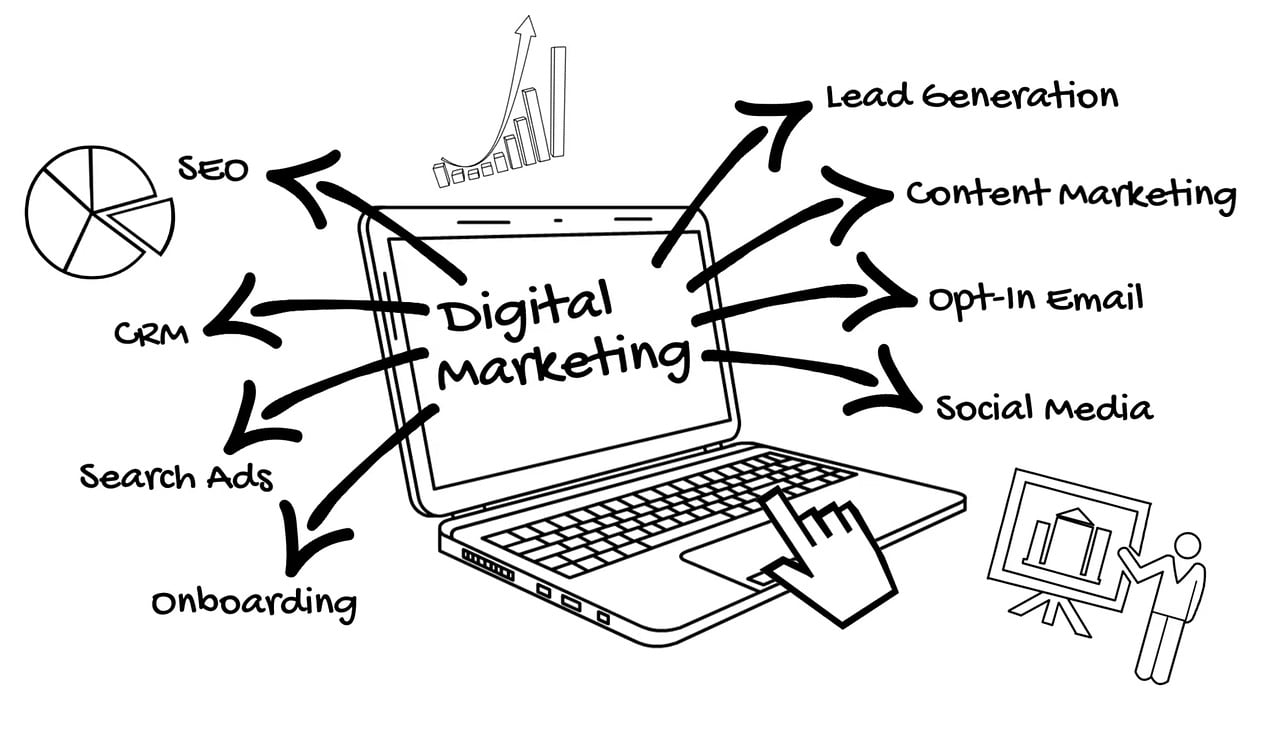
Lead generation channels do not operate in isolation. AI answering services can improve the performance of the traffic sources already bringing prospects to the business.
SEO benefits through better conversion
Search engine optimization brings visitors to service pages, location pages, and contact pages. But rankings alone do not generate revenue. If website visitors cannot get quick answers or schedule easily, organic traffic underperforms. AI chat and answering tools can increase the percentage of visitors who convert into leads.
Paid ad efficiency
Paid search and local service ads can be expensive. Every missed call or abandoned inquiry increases acquisition cost. AI answering services help businesses protect ad spend by improving lead capture consistency.
Local SEO and reputation support
Fast response contributes to better customer experiences, which can influence reviews and referrals over time. Strong customer communication also aligns with broader principles of service quality and trust. Businesses can learn from frameworks around customer experience and service operations, including educational materials like customer service and satisfaction guidance from Penn State Extension.
Best practices for implementing AI answering services for lead generation
Map the full lead journey first
Before deploying AI, businesses should define how leads currently arrive, who handles them, where delays occur, and what information is needed to move them forward. Without this clarity, automation may simply replicate existing inefficiencies.
Start with high-frequency, repeatable scenarios
The best early use cases are usually repetitive interactions such as appointment requests, service-area questions, after-hours intake, estimate requests, and FAQ handling. These are easier to automate effectively and deliver quick gains.
Write scripts around customer intent
Good AI conversations are not robotic checklists. They should reflect why people contact the business in the first place. Use plain language, anticipate common concerns, and keep the path to a human clear.
Integrate with CRM and scheduling tools
Lead generation improves most when AI is connected to the systems the business already uses. If intake data remains trapped in a separate dashboard, follow-up can still break down. Integrations reduce manual work and improve accountability.
Set escalation rules
Not every inquiry should stay with AI. Define when the system should transfer to a person, trigger an urgent notification, or create a priority task. This is especially important for emergency services, sensitive matters, and high-value leads.
Review transcripts and outcomes regularly
Businesses should monitor how AI conversations perform. Are leads completing the intake flow? Are common questions being answered correctly? Are there drop-off points? Ongoing review helps improve scripts, qualification logic, and conversion rates.
Common concerns and limitations to address
Will it feel impersonal?
It can, if implemented poorly. But when AI is configured with clear language, appropriate tone, and useful next steps, many prospects value speed and clarity more than whether the first response came from a human. The key is making the experience helpful, not pretending AI is something it is not.
Can AI handle complex conversations?
It can handle many common scenarios well, but it should not replace human judgment in every case. Complex sales discussions, emotionally sensitive issues, and unusual edge cases still benefit from skilled staff. The strongest approach is usually hybrid: AI handles initial intake and routine interactions, while humans manage nuance and closing.
What about errors or misunderstandings?

That risk exists with any intake process, including human-only ones. The solution is careful design, limited scope where appropriate, regular testing, and easy escalation paths. Businesses should start with clear use cases and expand as confidence grows.
Is it only for large companies?
No. In many cases, smaller service businesses benefit the most because they have the fewest resources to cover every inquiry manually. AI can give them responsiveness that would otherwise require additional staff.
Metrics to track after implementation
To understand whether an AI answering service is improving lead generation, businesses should measure outcomes before and after launch. Useful metrics include:
- Total inbound inquiries captured
- Missed call rate
- Average response time
- Lead-to-appointment conversion rate
- Lead qualification rate
- After-hours lead volume
- Cost per lead
- Booked revenue from AI-assisted inquiries
- Follow-up completion time
- Customer satisfaction with intake experience
These numbers reveal whether the system is just answering more contacts or actually helping the business generate better leads and more sales.
What the future looks like for service business lead generation
AI answering services are likely to become more capable, more integrated, and more personalized. Businesses will increasingly use them not only for intake but also for outbound follow-up, appointment reminders, reactivation campaigns, multilingual communication, and deeper CRM-based personalization.
As these tools improve, the competitive gap may widen between businesses that respond instantly and those that still rely on voicemail and delayed callbacks. In crowded service markets, convenience and responsiveness are powerful differentiators.
That does not mean human interaction becomes less important. In fact, strong human sales and service teams become even more valuable when AI handles the repetitive front-end work. Staff can spend more time on trust-building, problem-solving, and closing high-value opportunities.
Takeaways
AI answering services improve lead generation for service businesses because they solve one of the most expensive hidden problems in marketing: lost opportunities caused by slow, inconsistent, or unavailable response. By answering inquiries immediately, capturing structured lead data, qualifying prospects, and routing them efficiently, these systems help businesses convert more of the demand they already generate.
For service companies, the real value is not just automation. It is reliability. Every call answered, every inquiry acknowledged, and every prospect guided toward the next step strengthens the lead pipeline. When implemented thoughtfully, AI answering services help businesses increase conversions, improve customer experience, and make their marketing efforts work harder. In a market where speed and accessibility often decide who wins the job, that can make a measurable difference in growth.
Need help with How AI Answering Services Improve Lead Generation for Service Businesses?
Text now
Need help with How AI Answering Services Improve Lead Generation for Service Businesses? Text now